Pasta Primavera Recipe
Introduction
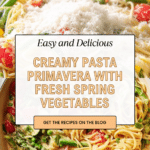
Pasta Primavera is a vibrant and fresh dish, perfect for celebrating seasonal vegetables in a creamy, flavorful sauce. This recipe combines tender pasta with a medley of sautéed veggies, Parmesan cheese, and a hint of lemon for a bright finish.
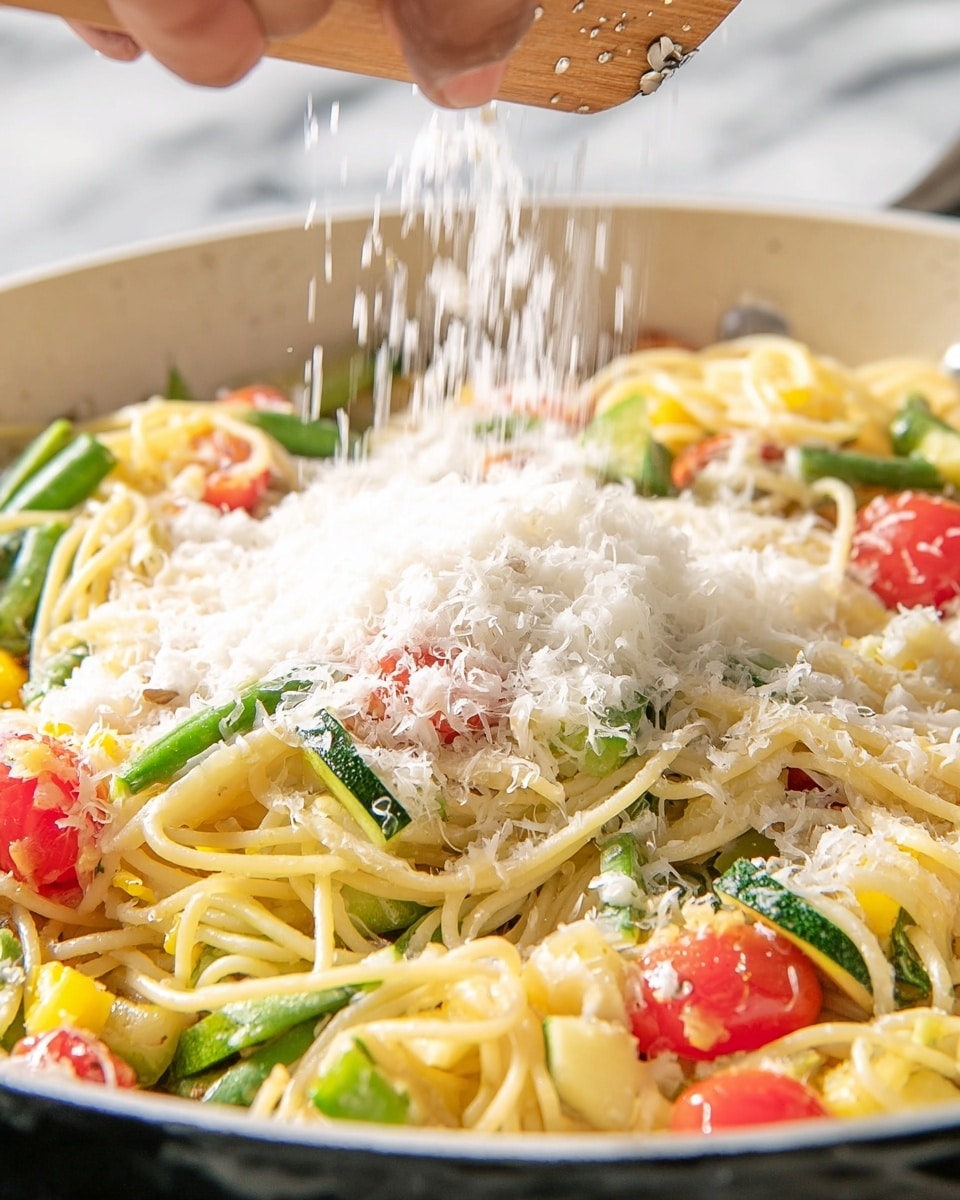
Ingredients
- Kosher salt
- 12 oz. spaghetti
- 1/4 cup (or more) extra-virgin olive oil
- 1 large zucchini, sliced into 1/2″ half-moons
- 1 bunch asparagus, trimmed, quartered crosswise
- 1/2 red onion, sliced into 1/4″ half-moons
- 2 small leeks, cut into 1/2″ half-moons
- 1 red bell pepper, seeds and ribs removed, chopped
- 5 cloves garlic, finely chopped
- 1 cup grape tomatoes
- 3/4 cup heavy cream
- 1/3 cup frozen peas, thawed
- 2 oz. Parmesan, finely grated, plus more for serving
- Lemon zest and juice from 1 small lemon (optional)
- Freshly ground black pepper
Instructions
- Step 1: In a large pot of boiling salted water, cook the spaghetti, stirring occasionally, until just under al dente according to package directions, about 6 to 7 minutes. Reserve 1 1/2 to 2 cups of the pasta water before draining.
- Step 2: Meanwhile, heat 1/4 cup olive oil in a large high-sided skillet over medium-high heat. Add zucchini and cook, stirring occasionally, until starting to soften and turn lightly golden but still vibrant green, about 3 to 4 minutes. Season with 1/2 teaspoon salt. Add asparagus, season with another 1/2 teaspoon salt, and cook, stirring often, until asparagus is vibrant green and softened, about 4 minutes. Transfer vegetables to a plate.
- Step 3: Reduce heat to medium. Add 1 to 2 tablespoons olive oil to the skillet if needed. Add red onion and leeks, cooking and stirring occasionally until they begin to wilt and caramelize, about 5 minutes. Season with 1 teaspoon salt. Add bell pepper and cook, stirring and reducing heat if onions and leeks start to char, until bell pepper is slightly softened, about 3 to 4 minutes. Add garlic and cook, stirring, until fragrant and onions are translucent, about 2 minutes.
- Step 4: Lower the heat to medium-low. Stir in grape tomatoes, heavy cream, peas, and 1/2 cup reserved pasta water. Cook, stirring occasionally, until tomatoes are tender and beginning to burst, about 2 to 3 minutes. Add the cooked spaghetti, reserved zucchini and asparagus, Parmesan cheese, and a splash of pasta water. Toss to combine, adding more pasta water as needed, until sauce is glossy and cheese is melted.
- Step 5: Stir in lemon zest and juice, if using. Season with freshly ground black pepper to taste. Serve immediately with extra Parmesan on the side.
Tips & Variations
- For a lighter dish, substitute half-and-half for heavy cream or use cream alternatives like coconut cream.
- Add fresh herbs such as basil, parsley, or thyme for extra flavor and color.
- Use any combination of seasonal vegetables you prefer, such as snap peas, broccoli, or mushrooms.
- To make it vegan, omit the cream and Parmesan, and use a plant-based cream and cheese substitute.
Storage
Store leftover Pasta Primavera in an airtight container in the refrigerator for up to 3 days. Reheat gently on the stove over low heat, adding a splash of water or broth to help loosen the sauce and prevent it from drying out. This dish is best enjoyed fresh but holds up well for quick lunches.
How to Serve
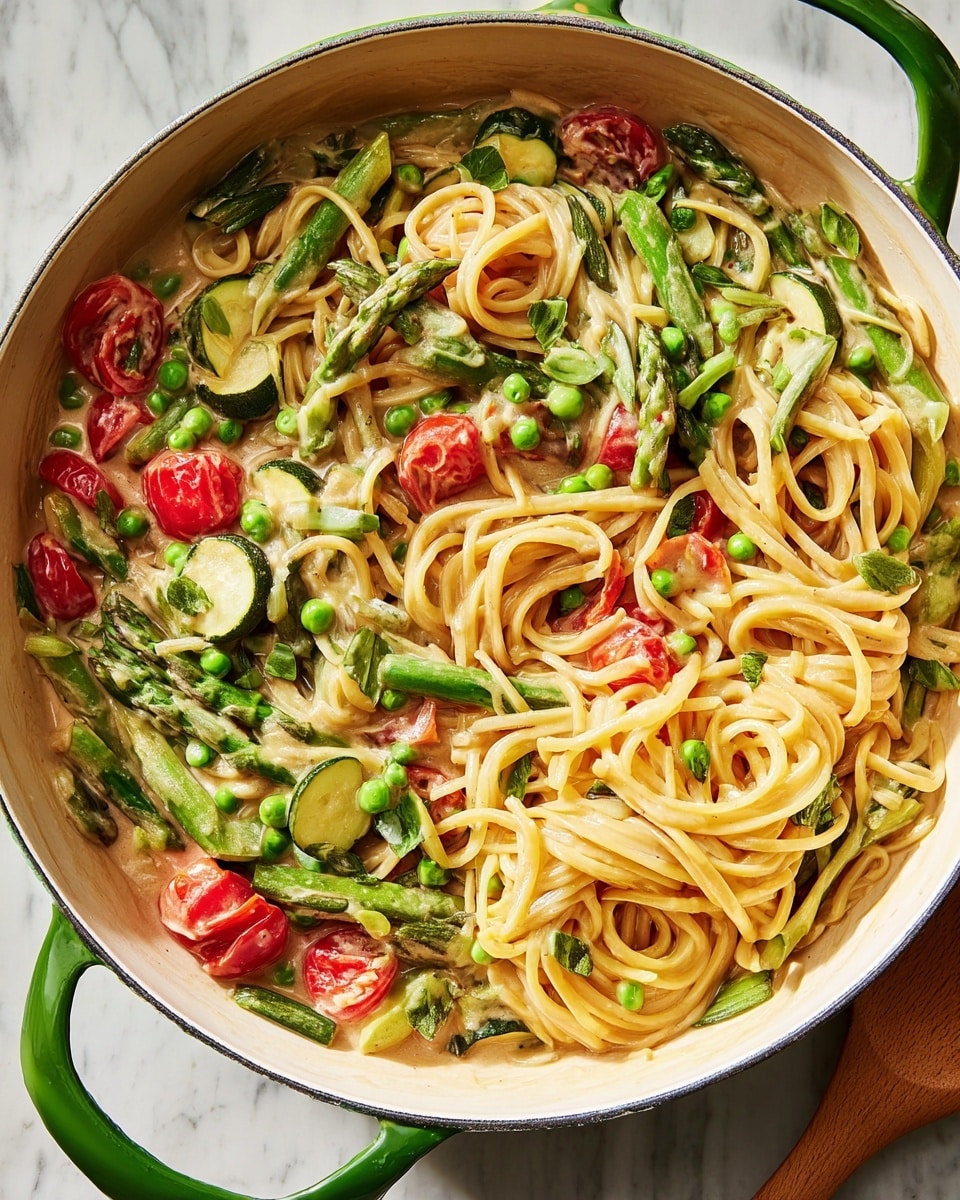
Serve this delicious recipe with your favorite sides.
FAQs
Can I use different pasta types for Pasta Primavera?
Absolutely. While spaghetti works well, other long pastas like linguine or fettuccine, or even short pasta like penne, can be used based on your preference.
Is Pasta Primavera suitable for meal prep?
Yes, it stores well and can be reheated easily. However, the vegetables are best when fresh, so slightly undercook them during the first cooking to prevent them from becoming mushy after reheating.
PrintPasta Primavera Recipe
Pasta Primavera is a vibrant and flavorful Italian-inspired dish featuring al dente spaghetti tossed with a medley of sautéed fresh vegetables in a creamy Parmesan sauce. Enhanced with garlic, grape tomatoes, peas, and a hint of lemon zest, this recipe delivers a perfect balance of textures and taste, ideal for a wholesome and elegant meal.
- Prep Time: 15 minutes
- Cook Time: 20 minutes
- Total Time: 35 minutes
- Yield: 4 servings 1x
- Category: Main Course
- Method: Stovetop
- Cuisine: Italian
- Diet: Vegetarian
Ingredients
Pasta
- 12 oz. spaghetti
- Kosher salt (for boiling pasta and seasoning vegetables)
Vegetables & Aromatics
- 1 large zucchini, sliced into 1/2” half-moons
- 1 bunch asparagus, trimmed, quartered crosswise
- 1/2 red onion, sliced into 1/4” half-moons
- 2 small leeks, cut into 1/2” half-moons
- 1 red bell pepper, seeds and ribs removed, chopped
- 5 cloves garlic, finely chopped
- 1 cup grape tomatoes
- 1/3 cup frozen peas, thawed
Sauce & Seasonings
- 1/4 cup (or more) extra-virgin olive oil
- 3/4 cup heavy cream
- 2 oz. Parmesan, finely grated, plus more for serving
- Lemon zest and juice from 1 small lemon (optional)
- Freshly ground black pepper
Instructions
- Cook Pasta: In a large pot of boiling salted water, cook the spaghetti, stirring occasionally, until just under al dente according to package directions, about 6 to 7 minutes. Reserve 1 1/2 to 2 cups of the pasta water before draining.
- Sauté Zucchini and Asparagus: Meanwhile, heat 1/4 cup of extra-virgin olive oil in a large high-sided skillet over medium-high heat. Add the zucchini and cook, stirring occasionally, until it starts to soften and turns lightly golden but remains vibrant green, about 3 to 4 minutes. Season with 1/2 teaspoon salt. Add the asparagus, season with another 1/2 teaspoon salt, and cook, stirring often, until asparagus is vibrant green and softened, about 4 minutes. Transfer these vegetables to a plate.
- Cook Onions, Leeks, Bell Pepper, and Garlic: Reduce heat to medium. Add 1 to 2 tablespoons of oil to the skillet if needed. Add onions and leeks and cook, stirring occasionally, until they begin to wilt and caramelize, approximately 5 minutes. Season with 1 teaspoon salt. Incorporate the bell pepper and cook, stirring continuously and reducing heat if the mixture starts to char, until slightly softened, about 3 to 4 minutes more. Add garlic and cook until fragrant and onions turn translucent, about 2 minutes.
- Prepare the Creamy Sauce: Lower the heat to medium-low and add the grape tomatoes, heavy cream, frozen peas, and 1/2 cup of the reserved pasta water to the skillet. Cook, stirring occasionally, until the tomatoes are tender and starting to burst, about 2 to 3 minutes.
- Combine Pasta and Vegetables: Add the drained spaghetti, sautéed zucchini, asparagus, grated Parmesan, and a splash of pasta water to the skillet. Toss everything together, adding more pasta water as needed, until the sauce is glossy and the cheese melts, coating the pasta and vegetables evenly.
- Finish with Lemon and Pepper: Stir in the lemon zest and juice if using, then season with freshly ground black pepper to taste. Serve warm with additional Parmesan if desired.
Notes
- Reserve pasta water to help adjust the sauce’s consistency and enhance flavor.
- Lemon zest and juice are optional but add a bright, fresh finish.
- Make sure not to overcook the pasta; it should be just under al dente so it finishes cooking in the sauce.
- If you prefer, substitute heavy cream with half-and-half for a lighter sauce.
- You can add other seasonal vegetables like peas or mushrooms as preferred.
Keywords: Pasta Primavera, Creamy Pasta, Italian Vegetable Pasta, Spring Pasta, Vegetarian Pasta